How healthy is the air we breathe?
Every day, we share enclosed spaces with dozens, sometimes hundreds, of people. Offices, meeting rooms, restaurants, shopping malls, hospitals and airports have become an integral part of our life. These spaces may look clean, air-conditioned and comfortable. But how healthy is the air we are breathing in these enclosed spaces? How do we know whether air we breathe is healthy?
How diseases spread through air
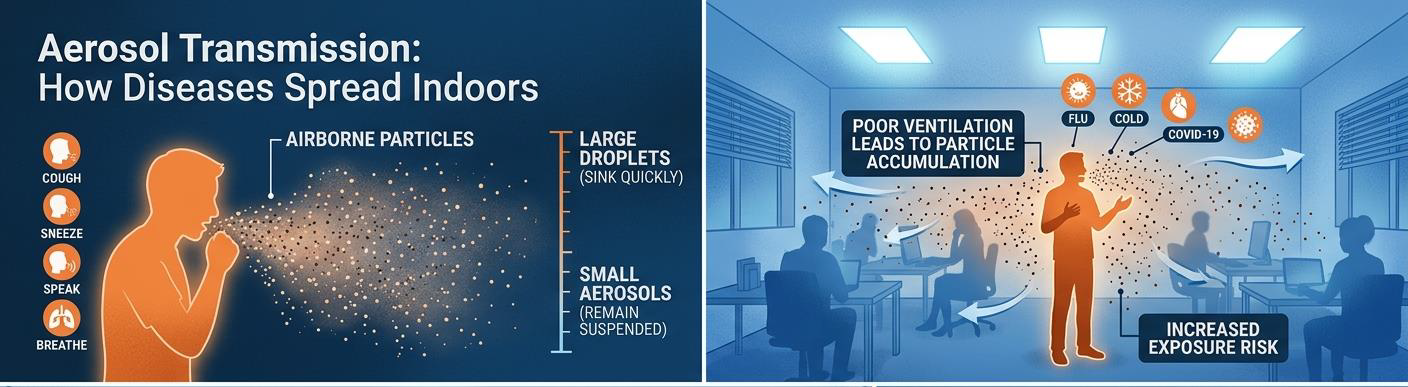
Scientific evidence demonstrated that many respiratory illnesses, including COVID-19, influenza, tuberculosis, and the common cold, spread through tiny airborne particles that remain suspended in the air for extended periods. When an infected person speaks, breathes, coughs, sneezes, these particles are released into the surrounding air. In poorly ventilated spaces, they can accumulate over time, increasing the likelihood of transmission to others sharing the same environment.
Why CO₂ is a useful ventilation indicator
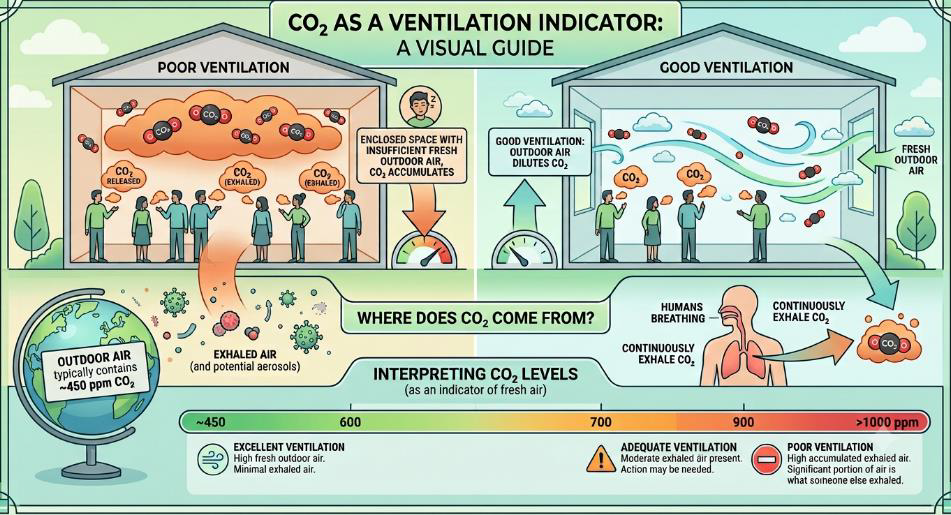
Good ventilation helps dilute airborne contaminants and reduce the concentration of infectious aerosols by supplying outdoor air. But how do we know whether a space is adequately ventilated? We are generally aware of the temperature, humidity in an indoor space, but not ventilation. Measuring ventilation directly is often complex but there is a practical indicator that can provide valuable insights into how well a space is ventilated i.e., carbon dioxide (CO₂).
Outdoor air typically contains about 450 ppm (parts per million) of CO₂. In enclosed spaces with insufficient fresh outdoor air, the CO₂ released by occupants accumulates and rises above 450 ppm. CO₂ measured in enclosed spaces serves as an effective indicator of the amount of exhaled air present in a space and ventilation.
Ventilation at various India’s public spaces – What the numbers revealed:
Office enclosed meeting room:
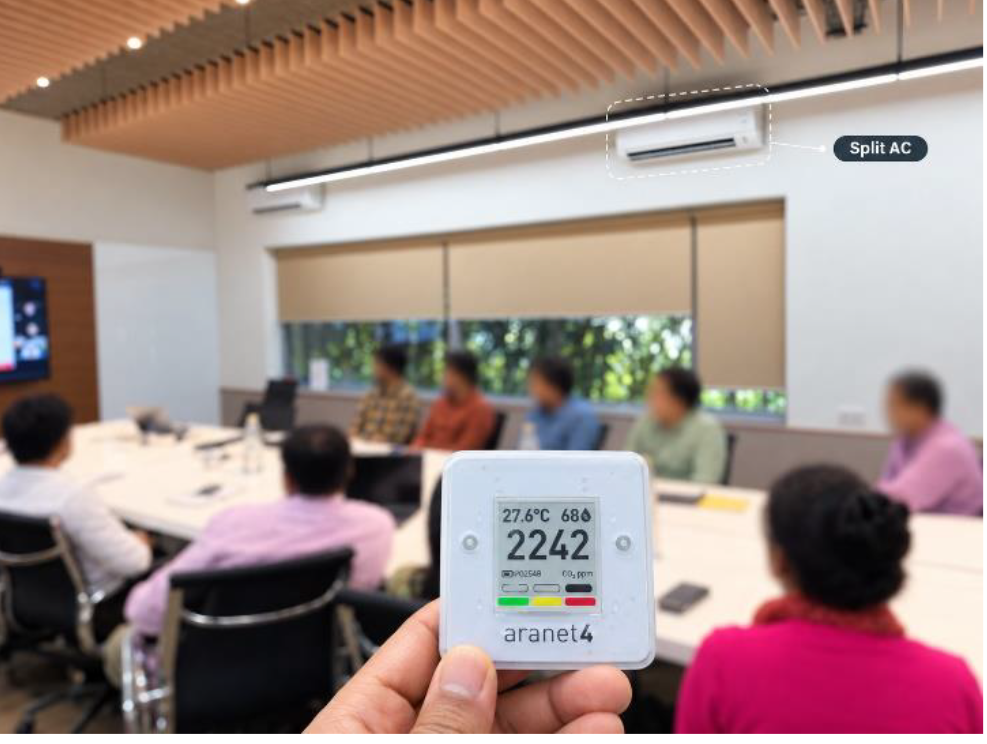
In many offices around the world, enclosed meeting rooms are cooled using split air conditioners that recirculate indoor air with little or no fresh air ventilation. As a result, carbon dioxide (CO₂) levels rise rapidly whenever group of people occupy these spaces for extended periods.
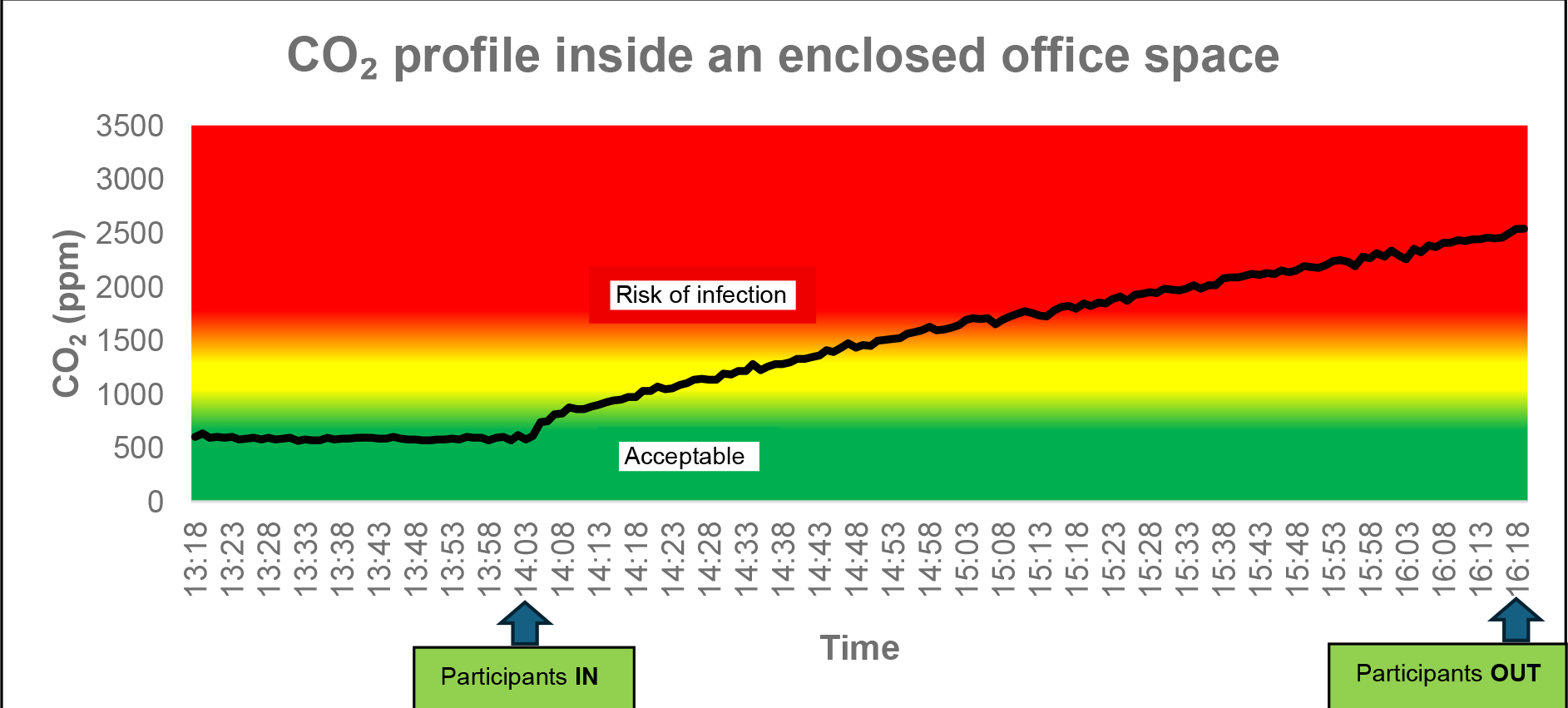
The photograph below captures CO₂ (in ppm) concentration during a departmental workshop attended by 12 participants over a period of 2 hours. While the temperature in air-conditioned conference room remained within a comfortable range of 25°C to 27.3°C, the indoor CO₂ concentration climbed to over 2200 ppm, highlighting the hidden risk of inadequate ventilation despite acceptable thermal comfort.
Multi-speciality hospital:
CO₂ measurements were recorded in the waiting area of a renowned hospital in India during a routine health check-up visit on 2 September 2026. Measurements were taken at different times during the day to understand how indoor air quality changes with occupancy.
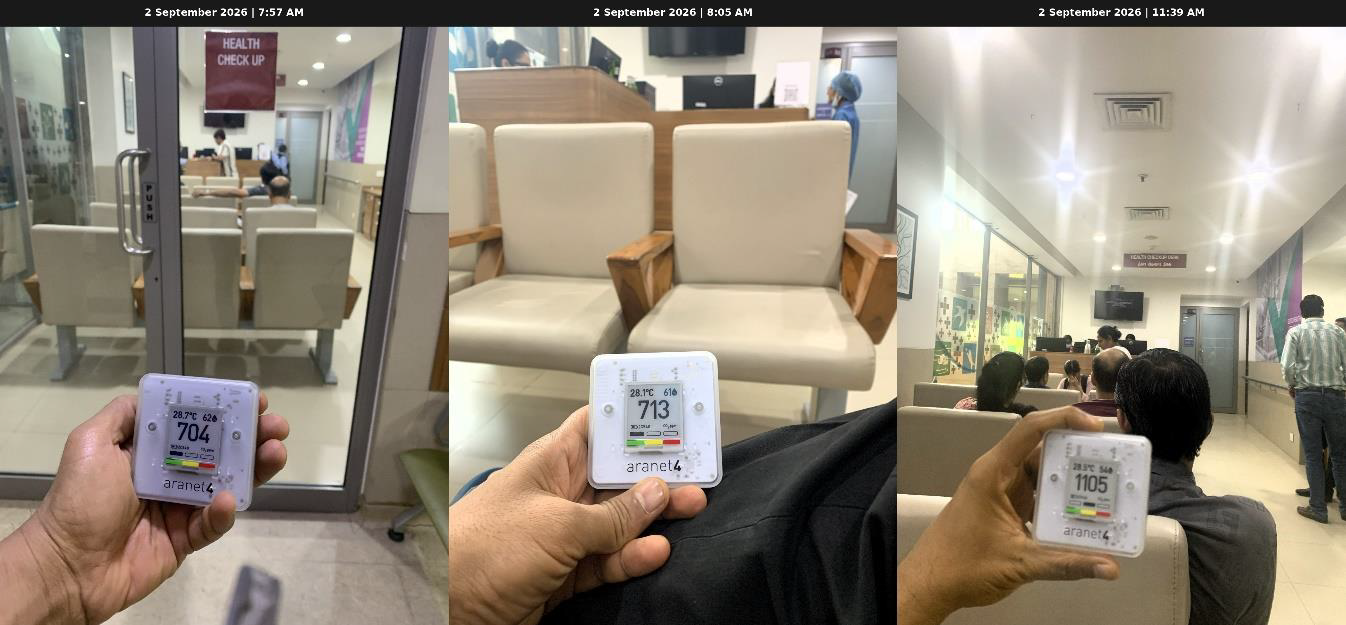
CO₂ levels remained around 700 ppm outside and inside health check-up waiting area during the early morning with few occupants but increased to 1105 ppm by late morning as occupancy rose. The rising CO₂ concentration indicates increasing accumulation of exhaled air, inadequate outdoor air and inadequate ventilation.
The hospital waiting area appeared clean, air-conditioned and comfortable throughout the observation period. However, the CO₂ measurements revealed a risk of poor ventilation and conducive environment for infection transmission that was not visible to occupants.
Restaurant:
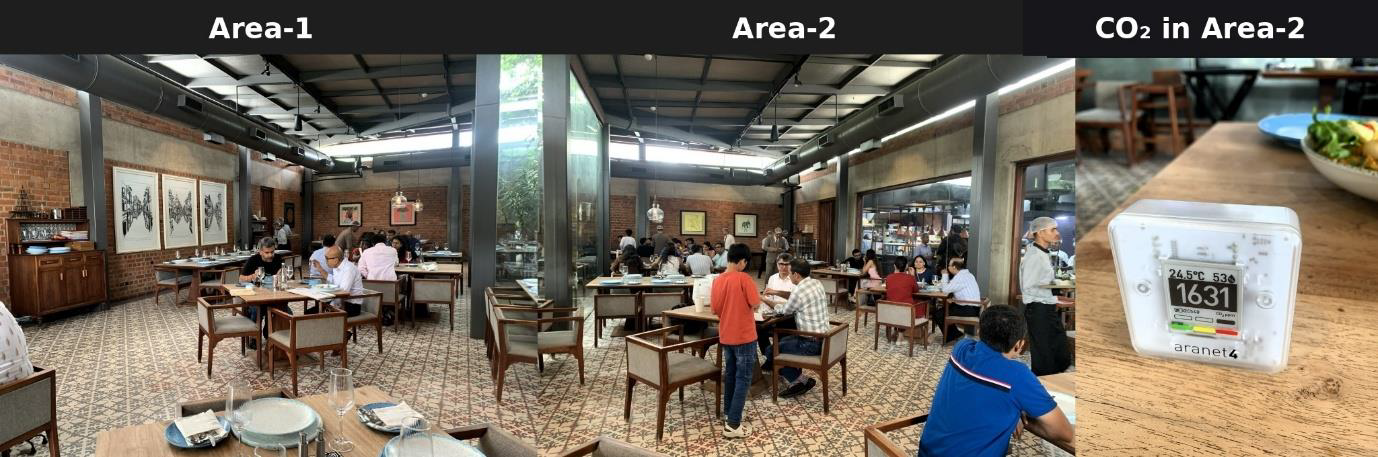
To most occupants, the restaurant space shown in below image would appear fresh, open, and well ventilated. Despite the restaurant’s pleasant aesthetics, excellent lighting, comfortable thermal conditions, and proximity to outdoor greenery, the measured CO₂ level of 1631 ppm suggests that the ventilation rate is inadequate to dilute the exhaled air generated during medium occupancy.
The observation in this restaurant is an excellent example of why indoor air quality cannot be assessed solely through visual perception. Measuring CO₂ provided a valuable insight into how poor the ventilation was and the risk of disease transmission in real-world operating conditions of enclosed spaces.
Conclusion:
The most important lesson during these measurements is that air conditioning and ventilation are not the same. A space can feel cool and provide thermal comfort while still providing inadequate fresh-air ventilation. When ventilation is inadequate, infectious aerosols can accumulate in enclosed spaces, increasing exposure for everyone sharing the space. The risk is influenced by three factors i.e., occupancy, exposure time and ventilation effectiveness.
The intention of the blog is not to provide definitive judgments about the above enclosed spaces. Instead, the data presented in the blog is a reminder that ventilation is an important aspect for public health. Just as we routinely monitor temperature of a space, energy consumption, water quality, and traffic conditions in our everyday life, we need to pay greater attention to the air we breathe and we share.
Affordable ventilation monitoring systems, smarter buildings with ventilation control and increased awareness shall help make indoor air quality more visible and improves general well-being of occupants in the enclosed spaces.

The Technical Team at HMX brings engineering expertise in advanced evaporative cooling, HVAC systems and energy-efficient climate-control solutions. Drawing on HMX’s product technologies, certifications and application knowledge, the author/s explain complex cooling concepts in a practical manner. Our articles cover DAMA® Heat Exchanger based IDEC + Adiabatic Cooling, Indirect Evaporative Cooling, TFA Units, Hybrid AHUs, and HVAC Systems. Technical insights address system selection, cooling performance, indoor air quality, fresh-air requirements, energy saving and application conditions. The content helps engineers, HVAC consultants, architects and facility teams evaluate technologies for their specific spaces. It is relevant to industrial and commercial applications including factories, warehouses, offices, workshops and large buildings. The expertise extends across diverse markets and practical technical guidance to support informed, efficient and application-focused cooling decisions.